Innovation is at the heart of everything we do. Our mission is to develop photovoltaic technologies that deliver higher efficiency, greater reliability, and maximum return on investment for our customers worldwide.
Our dedicated research and engineering teams continuously work on improving cell architecture, module design, manufacturing automation, and quality assurance to create products that perform reliably for over 30 years.
By combining German engineering philosophy with advanced manufacturing technologies, German Solar is building the next generation of high-performance solar modules.
Our Innovation Areas
N-Type Cell Technology
Improving efficiency while reducing degradation and increasing module lifespan.
TOPCon Cell Architecture
Enhancing carrier selectivity to achieve higher conversion efficiency and improved temperature performance.
Bifacial Module Technology
Generating electricity from both front and rear sides of the module for increased energy yield.
Deep Blue (Shark 2.0) Platform
An optimized module platform featuring improved cell interconnection, lower power loss, higher reliability, and excellent long-term performance.
Back Contact Cell Technology
Removing front-side busbars to maximize sunlight absorption and achieve premium aesthetics with industry-leading efficiency.
Smart Manufacturing
Using AI-powered inspection systems and fully automated production lines to ensure exceptional product consistency.
Sustainability
Reducing carbon emissions throughout manufacturing while increasing module recyclability and environmental responsibility.
Research Today. Power Tomorrow.
The German Solar Innovation Lab serves as the company’s research and technology development center, where engineers continuously improve photovoltaic performance, reliability, and manufacturing excellence.
Every new German Solar product undergoes extensive laboratory validation before commercial production.
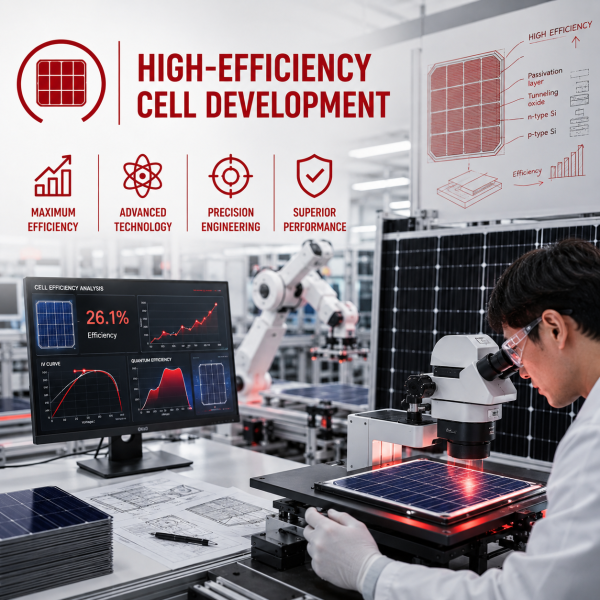
High-Efficiency Cell Development
Research focuses on:
N-Type Silicon
TOPCon Architecture
Back Contact Cells
Future Tandem Solar Cells
Perovskite-Silicon Hybrid Technologies
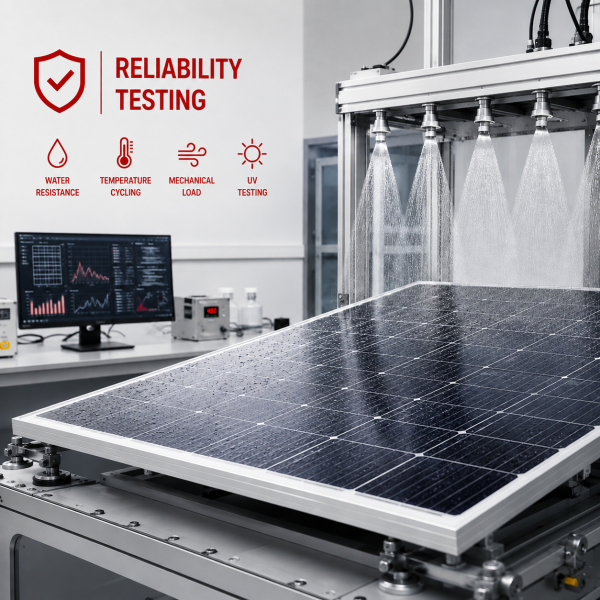
Module Reliability Testing
Every product is evaluated under extreme environmental conditions, including:
Thermal Cycling
Damp Heat Testing
Humidity Freeze
UV Exposure
PID Resistance
Salt Mist Corrosion
Ammonia Resistance
Sand & Dust Testing
Hail Impact Testing
Mechanical Load Testing
Wind Load Testing
Snow Load Testing
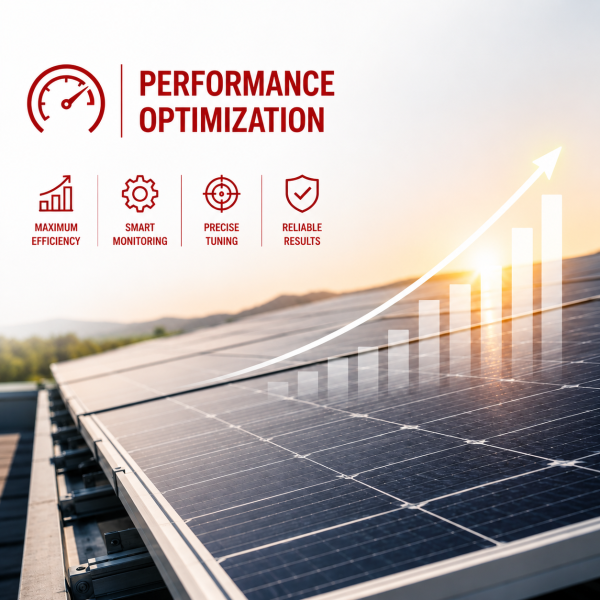
Performance Optimization
German Solar engineers continuously optimize:
Cell Matching
Ribbon Design
Heat Dissipation
Junction Box Performance
Module Interconnection
Anti-PID Performance
Low-Degradation Encapsulation Materials
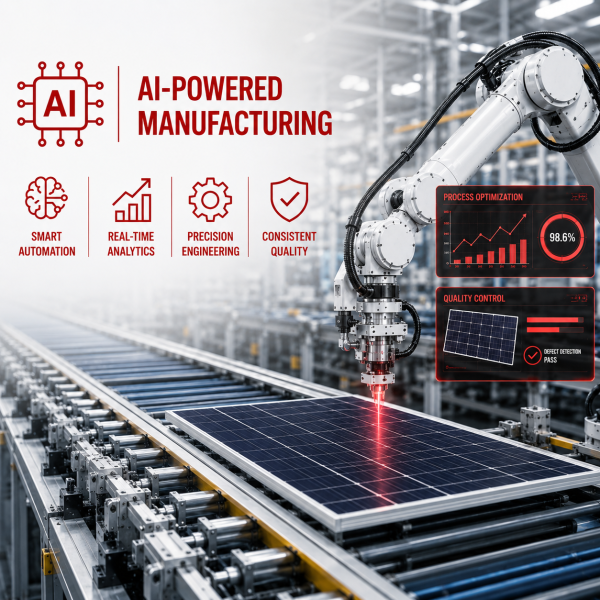
AI-Powered Manufacturing
Advanced artificial intelligence systems monitor production in real time, performing automated inspections for:
Cell defects
Soldering quality
Micro-cracks
Alignment accuracy
Electroluminescence (EL) imaging
Flash testing
Final visual inspection
This helps ensure consistent product quality and minimizes manufacturing defects.